
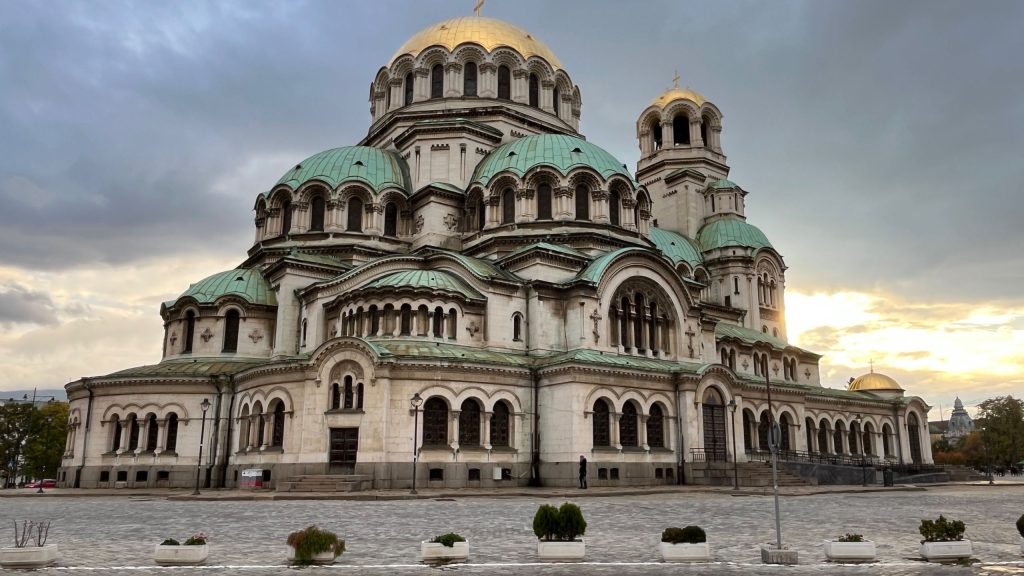
Nestled at the foot of Vitosha Mountain, which in the autumn is full of vibrant color as the trees change, Sofia stands as one of Europe’s most anciently inhabited cities. I do mean ancient. From the cabled trams to the unexpected museum where they wanted to add to the metro and found ancient formations of inner walls, Sofia is a surprising mix of a lot of history. Nowhere is this rich history more evident than in its remarkable collection of religious monuments. Bulgaria, and therefore Sofia, sits at the crossroads between East and West. Bulgaria experienced a melting pot of faiths through the years. This has left behind an architectural legacy that tells the story of empires, conversions and eventually, hopefully, coexistence. And it’s a beautiful city.
As I speak English, and am learning French, it was with a bit of wonder and amazement that I looked at street signs and words that made no sense. Even the little bit of the Greek alphabet and pronunciations of the letters didn’t help. I was extremely grateful to have a native guide (a friend of mine visiting her parents and family). I am quite sure everything would have been okay if she wasn’t there. Many of the younger generation speak English to some degree and there are English menus if you ask for one.
Another note, in 2026, Bulgaria will convert their local currency, the lev, to the Euro. Anyone visiting now will see both prices. Back to the rich opportunities to visit sacred sites in Sofia.
The Church That Gave the City Its Name
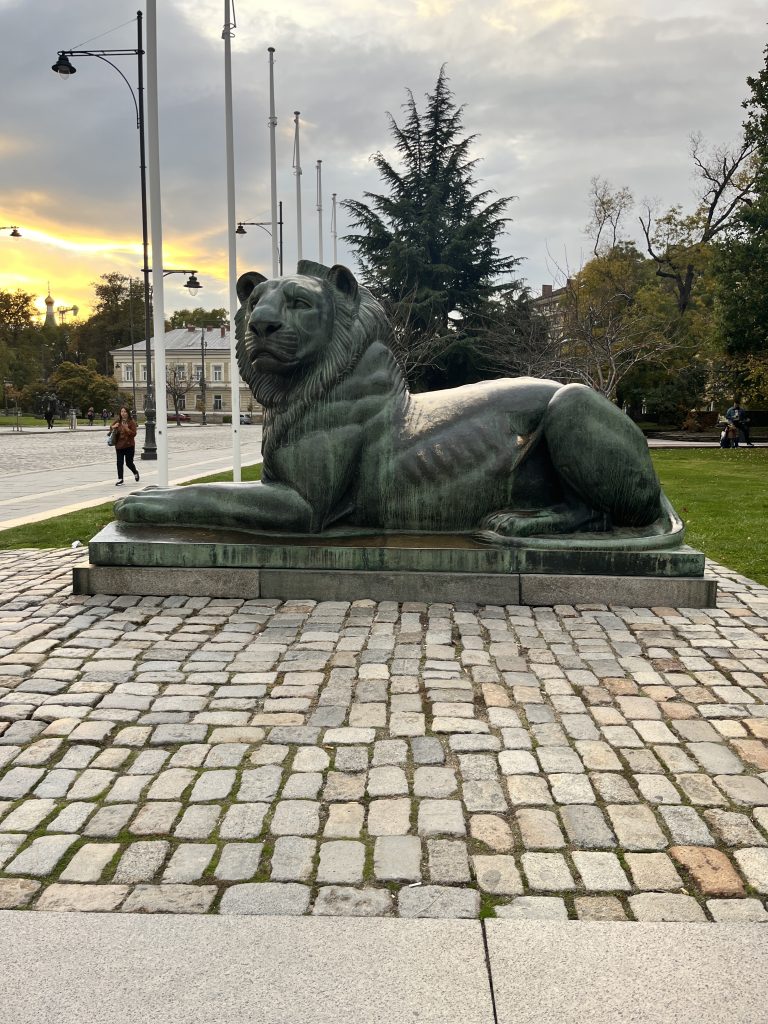
The Alexander Nevsky Cathedral may dominate Sofia’s skyline. However, it’s the modest Church of St. Sofia nearby that gave Bulgaria’s capital its name. I do mean modest. Located right next to the Cathedral, it’s an easy spot to miss. Just look for the lion and it is right there.
Dating back to the 6th century, this red-brick basilica, built during the reign of Byzantine Emperor Justinian I, sits on the ruins of several earlier churches. This was a common practice at that time. Churches and religious sites were often built on top of, or supplemented, by conquering tribes or peoples. A good example of this occurred during the transition from the Roman to Ottoman Empires. Walking through the ancient halls of the Church of St. Sofia, you’re literally standing on layers of history. The crypt below reveals remnants of a 4th-century church and even older Roman buildings beneath.
The church’s simple, austere beauty stands in stark contrast to its tumultuous past. It served as a mosque during Ottoman rule, survived two earthquakes, and functioned as a warehouse before a restoration. Today, its weathered walls and sparse interior speak to an enduring faith that has outlasted empires. Again, there is a really big difference between the size and decor of the Church of St. Sofia and the Alexander Nevsky Cathedral.
The Golden Domes of Alexander Nevsky
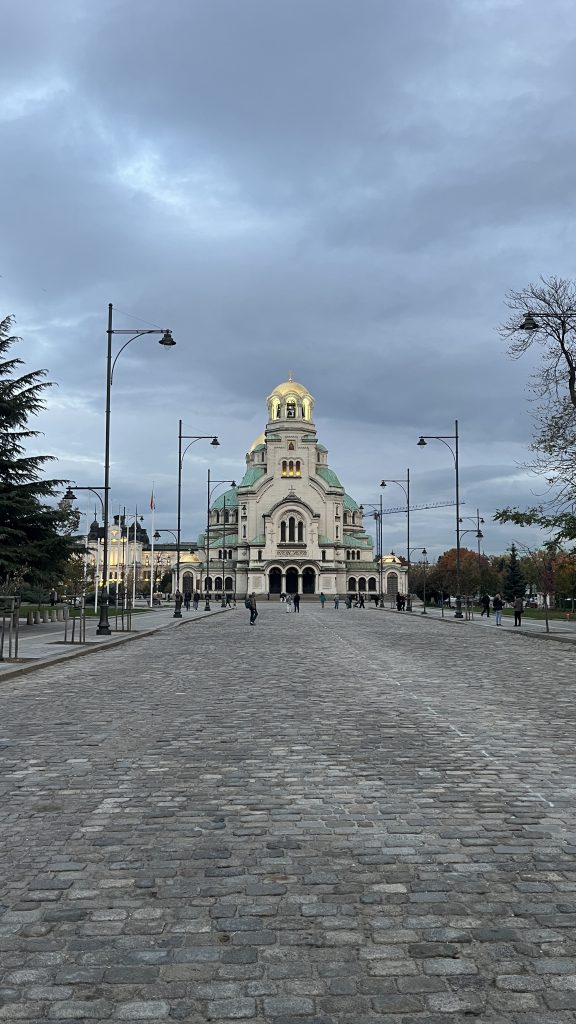
The easiest of all the sacred sites to see, no matter where you are in Sofia, is the magnificent Alexander Nevsky Cathedral. It’s one of the largest Eastern Orthodox cathedrals in the world. Built between 1882 and 1912 as a memorial to the 200,000 Russian soldiers who died liberating Bulgaria from Ottoman rule. This Neo-Byzantine masterpiece is breathtaking in every sense. It’s incredibly easy to get to and surrounded by cobblestones and enough space to take some really great pictures.
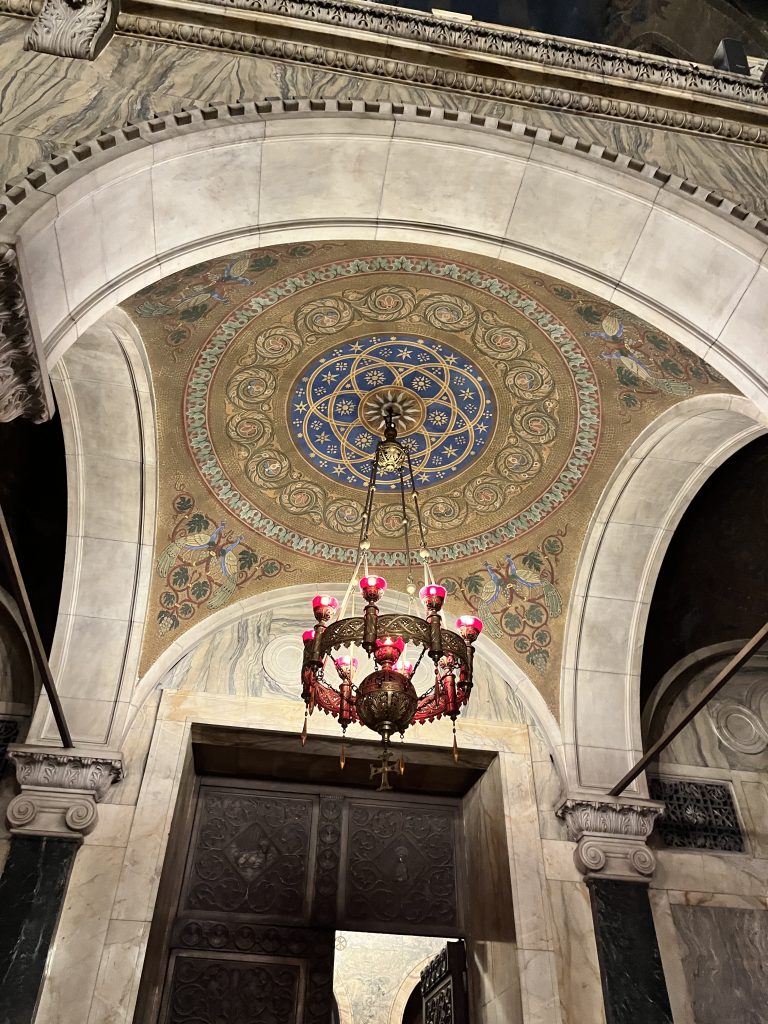

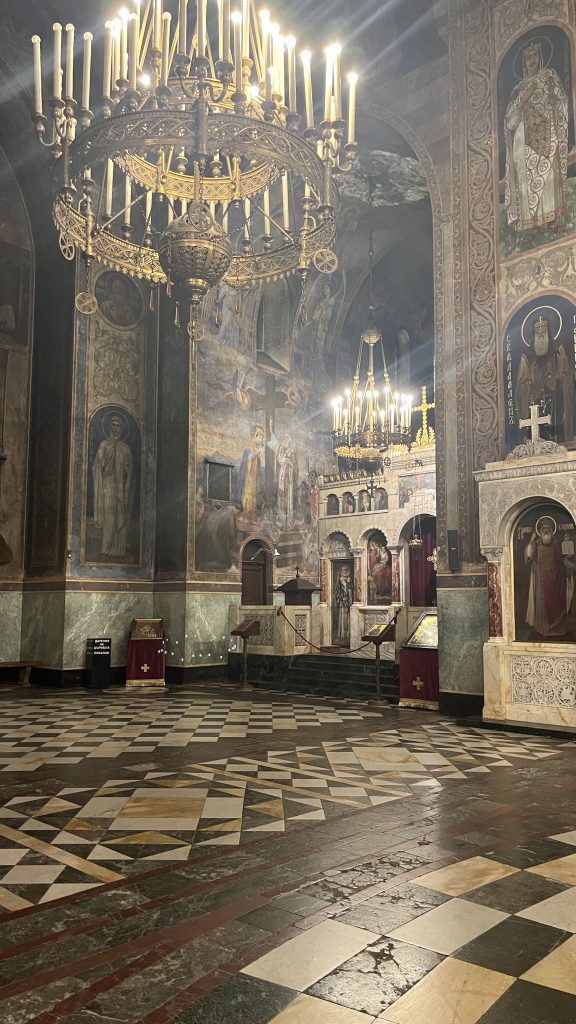
As you may have noticed, churches in Europe tend to feature great architecture, stained glass and a bit of history. Alexander Nevsky captures all three, beautifully. This cathedral’s gold-plated domes catch the sunlight and your eye easily. When you step inside, you see the soft flicker of hundreds of candles, smell the subdued scent of incense and feel the gaze of saints peering down from the ceiling. I can only imagine the art restoration budget for this cathedral.
The interior can hold 5,000 worshippers (or tourists) and the acoustics make even whispered prayers feel profound. I had the opportunity to hear the choir practice and the acoustics are amazing. Take the opportunity to light a candle. The high candle holders are for the living and the low candle holders are for the dead. I think it’s the first time I have seen it done that way, but maybe I haven’t been in enough churches yet.
A Rotunda Older Than the City Itself
Hidden among modern buildings in the city center, the Church of St. George Rotunda is Sofia’s oldest building. It dates back to the 4th century. This circular red-brick structure was originally built as a Roman bath or possibly a temple before being converted into a church. Over the centuries, it has served as a baptistery, a mosque during Ottoman rule and finally returned to an Orthodox church.
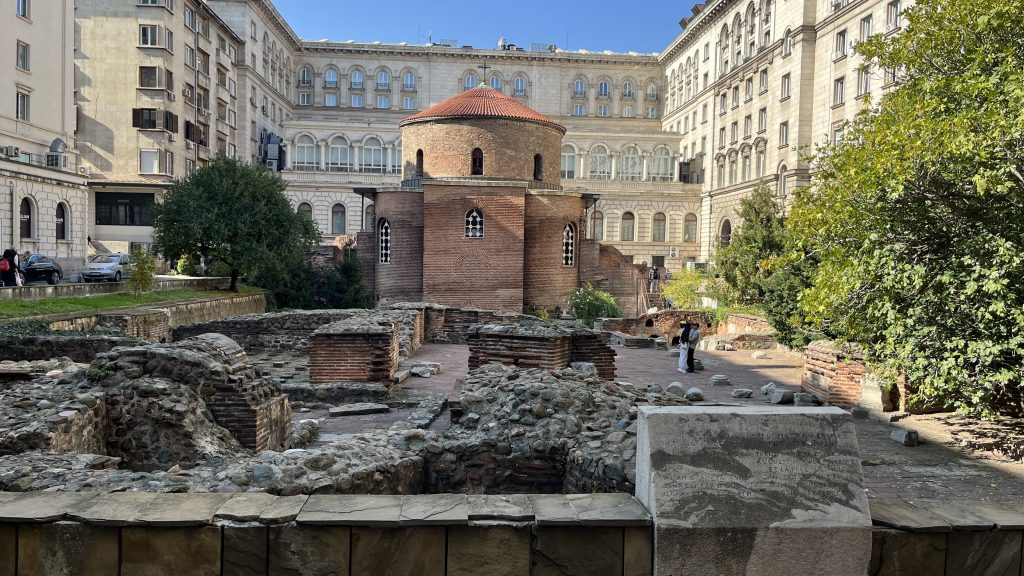
The rotunda’s greatest treasures are its medieval frescoes, painted in three layers from different periods. Ottoman whitewash preserved many of these paintings, rediscovered during restoration work. Standing inside this intimate space, surrounded by these ancient faces and scenes, is amazing.
Three More Worthy Sites
We passed by the Russian Church of St. Nicholas the Miracle-Maker, also featuring golden domes and a sky-blue façade. It looks like it was plucked from Moscow and dropped into Sofia, which apparently isn’t far from the truth. Built in 1914 for the Russian diplomatic community, the traditional Russian architecture brings a splash of color and distinctive domes to the city.
We were told the church is particularly loved by locals. They come to pray and leave notes in the crypt of Archbishop Seraphim, a Russian cleric believed to work miracles.
Sofia’s Ottoman heritage is beautifully represented by the Banya Bashi Mosque. It was built in 1566 by the renowned architect Mimar Sinan, who also designed Istanbul’s Süleymaniye Mosque. It remains Sofia’s only functioning mosque and stands as a testament to the city’s religious diversity.
The mosque’s name, which means “many baths”, comes from the mineral springs that still flow beneath it. Its elegant minaret and graceful dome create a striking silhouette and is really nice for photographers. Inside, the prayer hall’s simple beauty reflects Islamic architectural principles. The mosque continues to serve Sofia’s Muslim community and welcomes respectful visitors outside of prayer times. Key word here being respectful.

We did also visit the St. Nedelya Church. There are beautiful stained glass and the iconography inside is well taken care of. Again, the budget for art restoration has to be huge. There is a big plaque outside as the church was the site of an assassination attempt. The Soviet Union supplied local communists with materials to bomb the church while Tsar Boris I was attending. While he was not there, many of the post-WWI military leadership were there with many locals. One hundred plus years later, the church has recovered well and there is no visible trace of what happened.
A Living Tapestry
As you know by now, visiting churches to look at stained glass and soak up the architecture is becoming a hobby of mine. I have many pictures taken inside and out of a variety of churches. For me, what makes Sofia’s religious landscape so compelling isn’t just the individual monuments, but how they coexist. You can stand at certain intersections and see a church, mosque, and synagogue within view of each other. You can turn just a bit and see a statue commemorating a Russian general. Turn another to see a statue to commemorate the lives lost fighting for freedom. It’s a visual representation of Sofia’s history of religious coexistence, however imperfect history has shown it to be.
Just a quick note. These sacred spaces aren’t merely museums or tourist attractions. They are active places of worship where candles are lit, prayers are offered and communities gather for services. Early morning at Alexander Nevsky, you’ll find locals crossing themselves and lighting candles before work. The call to prayer still echoes from Banya Bashi. The Synagogue hosts Bar Mitzvahs and High Holy Day services. It’s just a place that provides opportunities for every faith to practice, which is amazing given the long history of Bulgaria in general.
Practical Tips for Visiting
Don’t be the tourist that is hunted down and fined or arrested for defacing a monument. When visiting these sacred spaces, remember you’re entering active places of worship. Dress modestly if required by the religious custom (covered shoulders and knees), remove your hat in churches and cover your head in mosques and synagogues if required and maintain a respectful silence. Photography policies vary. I took many pictures and there were no signs indicating I shouldn’t. The mosque and the synagogue might have some rules about photos, though.
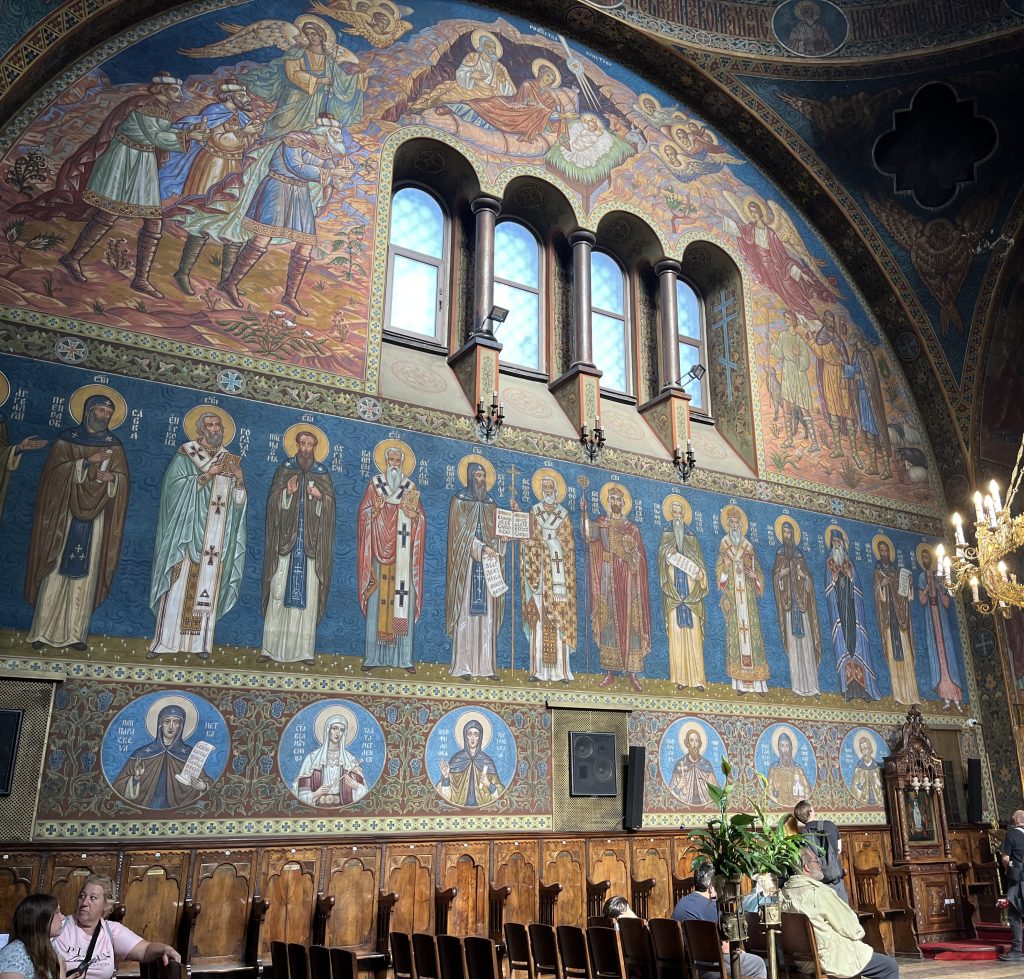
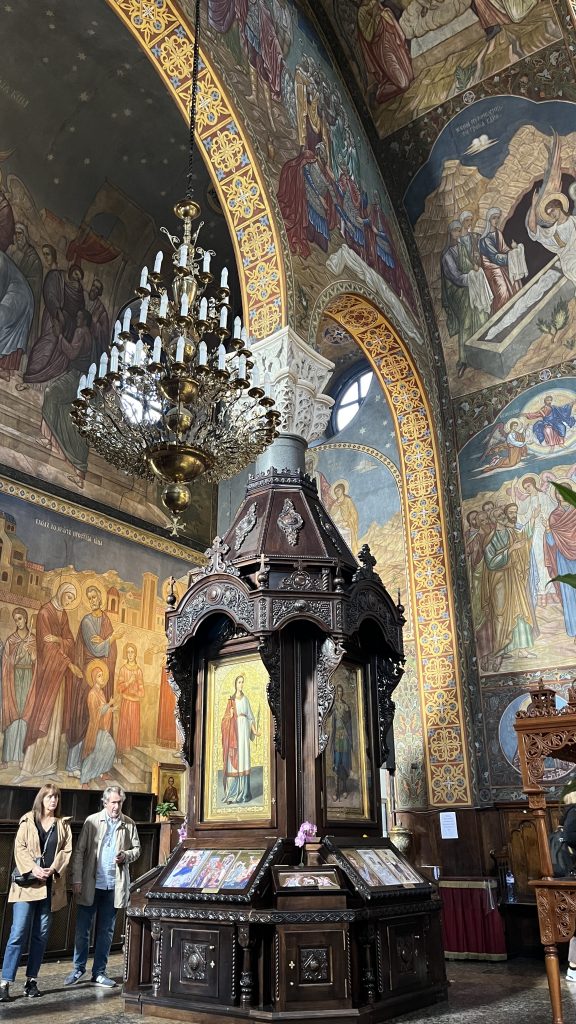

Many of these sites are within walking distance of each other in Sofia’s compact city center, making a religious heritage walking tour entirely feasible in a day. I don’t normally advocate for fitting in as many things as you can in one day because I think you really feel more rushed and can’t appreciate the sites, but in this case they are so close together that it’s possible to take your time and see them all. Entrance fees are not the norm, and donations are appreciated. Some charge a small fee for crypt museums or icon collections. Fair.
Sacred Sites in Sofia
Sofia’s religious monuments provide a window into the soul of a city that has withstood conquests, conversions, destruction and rebuilding countless times. From creating mounds of earth as places to convene for spiritual activities to building impressive sites supporting the religion of whomever was in charge at the time, Sofia has somehow maintained its spiritual identity. From Roman rotundas to Orthodox cathedrals, from Ottoman mosques to Sephardic synagogues, these sacred spaces stand as testaments to faith and resilience.
It’s a blissful visit, and I highly recommend making time to visit Sofia.